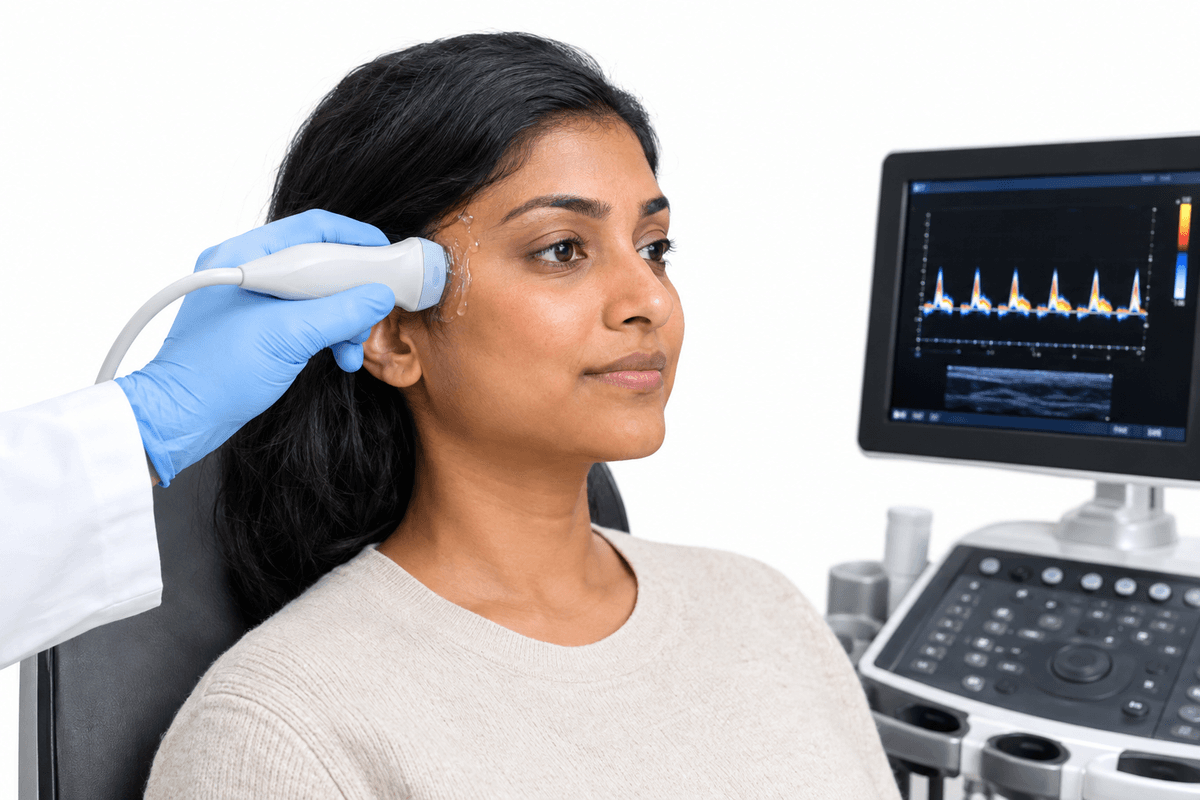
Performed by Dr. Venkata Harin Reddy Muduganti at Dr Venkata Harin Reddy
Transcranial Doppler (TCD) in Hyderabad is a non-invasive ultrasound technique that measures blood flow velocity in the major cerebral arteries through the skull. This painless diagnostic procedure helps detect stroke risk, vasospasm, and cerebrovascular abnormalities without radiation exposure. Dr Venkata Harin Reddy Muduganti provides expert TCD assessments with advanced neurophysiological expertise.
We believe in honest, upfront disclosure so you can make an informed decision.
A step-by-step look at what happens during this procedure.
A specialized ultrasound transducer is placed on specific skull windows including temporal, orbital, and suboccipital areas where the bone is thin enough to allow ultrasound penetration.
High-frequency sound waves (2 MHz) are transmitted through the skull to reach the major cerebral arteries including middle cerebral artery, anterior cerebral artery, and posterior cerebral artery.
The Doppler effect measures the frequency shift of reflected sound waves from moving red blood cells, calculating blood flow velocity and direction in real-time.
The system generates spectral waveforms displaying peak systolic velocity, end-diastolic velocity, mean flow velocity, and pulsatility index for each vessel examined.
Results are interpreted to detect stenosis, vasospasm, emboli, collateral circulation patterns, and assess cerebrovascular reserve capacity providing comprehensive hemodynamic information.
A structured, patient-first approach from first consultation to full recovery.
Dr Venkata Harin Reddy conducts a thorough neurological assessment and reviews medical history to determine specific TCD examination requirements and target vessels for optimal diagnostic yield.
Using state-of-the-art transcranial Doppler equipment, Dr Muduganti performs systematic bilateral examination of all accessible cerebral vessels through multiple acoustic windows with precise angle correction and depth adjustment.
With specialized neurophysiology training, Dr Venkata Harin Reddy analyzes velocity patterns, waveform morphology, and hemodynamic indices to identify abnormalities including stenosis, vasospasm, and embolic signals with high diagnostic accuracy.
Based on TCD findings, Dr Muduganti provides detailed reports with clinical correlation and develops individualized management plans including further investigations, medical therapy, or specialist referrals as needed for optimal patient outcomes.
What to expect at each stage of your recovery journey.
No recovery period needed. Patients can immediately resume all normal activities including driving, work, and physical activities as the procedure is completely non-invasive with no sedation or contrast agents used.
Within 24-48 hours, patients receive detailed TCD report with velocity measurements, interpretation, and clinical recommendations. Follow-up appointment scheduled if abnormalities detected or serial monitoring required.
Based on findings, some patients may require periodic TCD monitoring to track progression of cerebrovascular disease, assess treatment response, or monitor vasospasm resolution with intervals determined by clinical indication.
TCD provides quantitative measurement of cerebral blood flow velocities enabling early detection of high-grade intracranial stenosis and identification of patients at increased stroke risk requiring intervention.
For patients with subarachnoid hemorrhage, TCD reliably detects and monitors cerebral vasospasm, allowing timely therapeutic interventions to prevent delayed cerebral ischemia and improve neurological outcomes.
TCD can detect microembolic signals in real-time, helping assess cardioembolic sources, evaluate efficacy of antithrombotic therapy, and guide management in patients with high embolic risk conditions.
Patients receive comprehensive cerebrovascular hemodynamic assessment without radiation exposure, contrast agents, or invasive procedures, making it safe for repeated monitoring and suitable for all age groups including children.
Let's clear up some of the most common myths about transcranial doppler (tcd).
Get a personalised assessment from an experienced specialist. Understand your options, ask your questions, and decide with confidence.