Performed by Dr. Venkata Harin Reddy Muduganti at Dr Venkata Harin Reddy
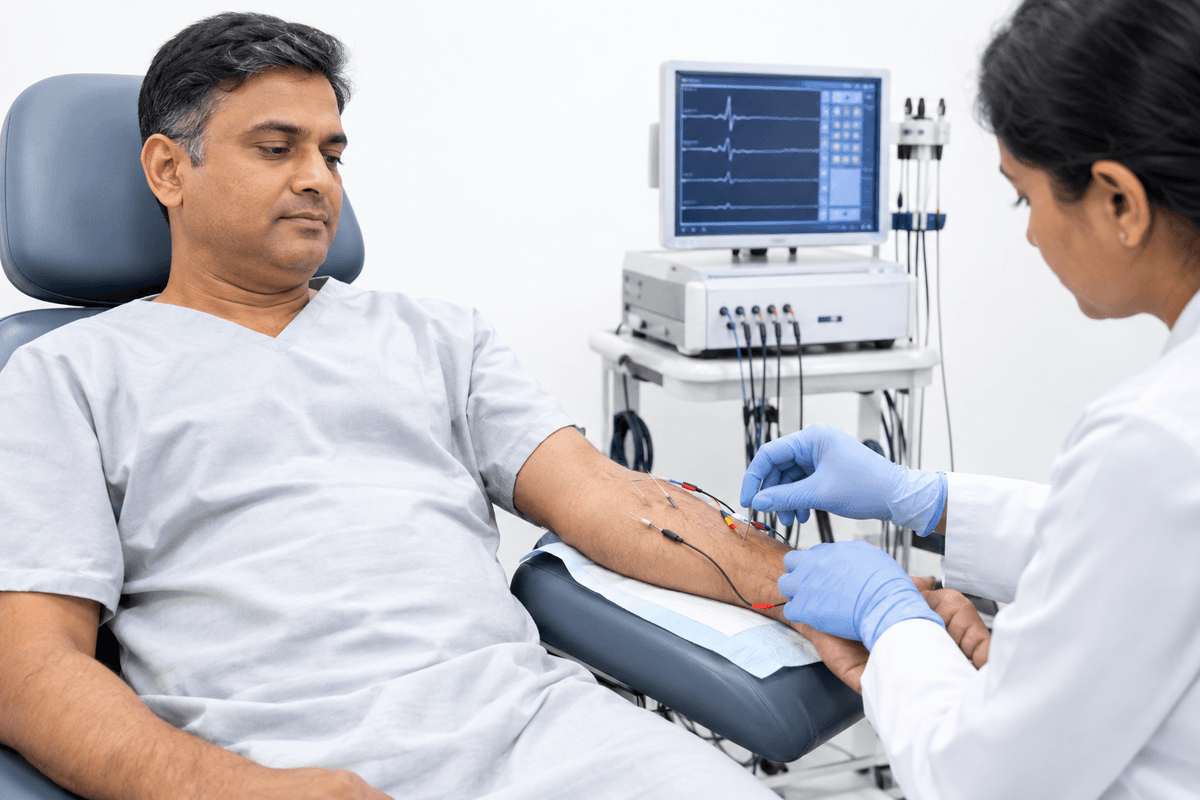
Electromyography (EMG) is a diagnostic test that measures the electrical activity of muscles and the nerves controlling them. Dr Venkata Harin Reddy uses EMG to identify nerve damage, muscle disorders, and problems with nerve-to-muscle signal transmission. The test helps pinpoint the cause of symptoms like weakness, numbness, tingling, or muscle pain.
We believe in honest, upfront disclosure so you can make an informed decision.
A step-by-step look at what happens during this procedure.
Small electrodes are placed on your skin over specific nerves. A mild electrical pulse stimulates the nerve, and the response is recorded to measure how well signals travel through the nerve.
A thin needle electrode is gently inserted through the skin into the muscle being tested. The needle detects electrical activity within the muscle fibers.
The electrical activity of the muscle is recorded while it is relaxed. Healthy resting muscles typically show minimal electrical activity.
You will be asked to gently contract the muscle by moving the limb or body part. The electrical pattern during contraction is recorded and analyzed.
The needle may be repositioned several times to test different muscles or different areas of the same muscle. The electrical signals are displayed on a monitor and may produce sounds through a speaker.
A structured, patient-first approach from first consultation to full recovery.
Dr Venkata Harin Reddy reviews your symptoms, medical history, and any previous tests to determine which muscles and nerves need to be examined during the EMG.
The test procedure is explained, including what sensations you may feel. The skin areas to be tested are cleaned, and you are positioned comfortably for the examination.
The EMG is performed methodically, testing the specific muscles and nerves relevant to your symptoms. Throughout the test, Dr Venkata Harin Reddy monitors the electrical signals and adjusts the examination as needed.
The electrical patterns are analyzed to identify any abnormalities. Dr Venkata Harin Reddy discusses the findings with you and explains how they relate to your symptoms and what the next steps in your care may be.
What to expect at each stage of your recovery journey.
You can resume normal activities immediately after the test. Some people experience mild muscle soreness similar to the feeling after exercise, which typically resolves within a day or two.
Any tenderness at needle insertion sites usually fades within one to two days. You may notice small bruises at the sites, which are normal and will fade on their own.
Your doctor will discuss the EMG results with you and recommend appropriate treatment or further testing based on the findings. The timeline for follow-up depends on your individual situation.
EMG helps identify whether symptoms are caused by nerve damage, muscle disease, or problems with nerve-muscle communication. This guides appropriate treatment decisions.
The test can pinpoint where along a nerve pathway damage or compression is occurring, such as at the spine, in the arm, or at a specific joint.
EMG is a diagnostic tool only. It identifies problems but does not treat them. Treatment decisions are made based on what the test reveals about the underlying condition.
EMG provides specific information about electrical function, but some conditions require imaging studies, blood tests, or other evaluations for complete diagnosis.
The right choice depends on your diagnosis, risks and circumstances — discussed with you at your consultation.
For some conditions, nerve conduction testing without needle EMG may provide sufficient information. This is less uncomfortable but gives less detail about muscle health.
Imaging tests show structural problems like herniated discs or nerve compression but do not measure electrical function. They may be used alongside or instead of EMG depending on the suspected condition.
For certain muscle or nerve conditions, blood work and physical examination may be sufficient for diagnosis without EMG. The choice depends on your symptoms and what your doctor suspects.
Let's clear up some of the most common myths about electromyography (emg).
Get a personalised assessment from an experienced specialist. Understand your options, ask your questions, and decide with confidence.