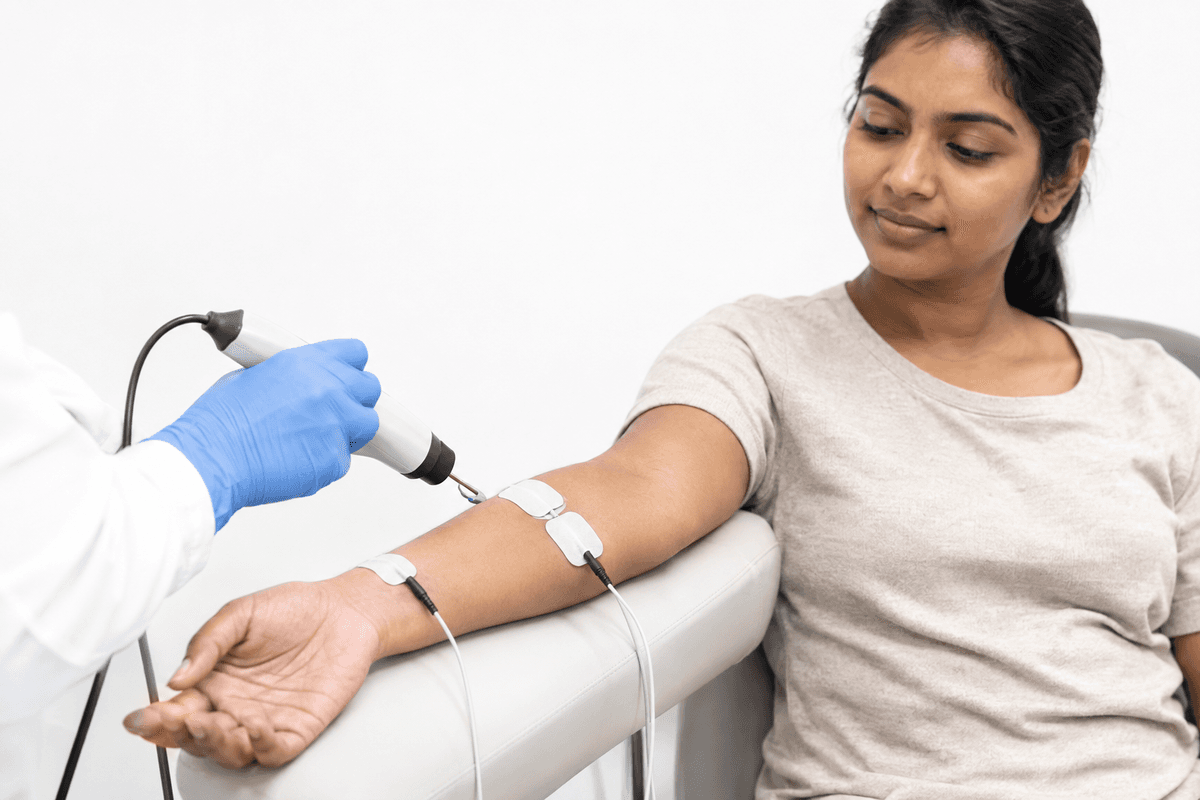
Performed by Dr. Venkata Harin Reddy Muduganti at Dr Venkata Harin Reddy
A Nerve Conduction Study (NCS) is a diagnostic test that measures how well and how fast electrical signals move through your nerves. Small electrodes are placed on your skin, and mild electrical pulses are used to check nerve responses. Dr Venkata Harin Reddy performs this test to identify nerve damage, pinpoint injury locations, and guide treatment for conditions affecting the peripheral nervous system.
We believe in honest, upfront disclosure so you can make an informed decision.
A step-by-step look at what happens during this procedure.
Small, flat metal discs called electrodes are attached to your skin over the nerves being tested. These electrodes will both deliver and record electrical signals.
A mild electrical pulse is sent through one electrode to stimulate the nerve. You may feel a brief tingling or tapping sensation.
Other electrodes placed along the nerve pathway pick up the electrical signal as it travels through the nerve. The time it takes and the strength of the signal are recorded.
The process is repeated on different nerves and at different points to map how well each nerve segment is conducting signals.
The recorded data shows the speed and strength of nerve signals, helping identify areas of damage, compression, or disease.
A structured, patient-first approach from first consultation to full recovery.
Dr Venkata Harin Reddy reviews your symptoms, medical history, and prior tests to determine which nerves need evaluation and tailor the study accordingly.
Each nerve is carefully tested using precise electrode placement and controlled electrical stimulation to obtain clear, accurate readings.
Throughout the test, responses are monitored to ensure reliable data collection and adjust technique as needed for patient comfort.
After the study, findings are interpreted and discussed with you, including what the nerve conduction patterns reveal about your condition and next steps for treatment.
What to expect at each stage of your recovery journey.
You can resume normal activities right away. Any tingling or mild discomfort usually resolves within minutes to an hour after the test.
Skin at electrode sites may remain slightly red or tender, but this typically fades quickly. No special care is needed.
Depending on findings, your doctor will discuss treatment options, which may include medication, physical therapy, lifestyle changes, or further testing.
The test helps pinpoint the location and extent of nerve damage, guiding appropriate treatment decisions. It does not treat or repair the nerve itself.
NCS can track how nerve conditions change over time or respond to treatment. Results depend on the underlying condition and its severity.
Findings inform whether conservative care, medication, or surgical intervention may be beneficial. The test itself does not guarantee symptom relief.
NCS evaluates only large nerve fibers; it may not detect small fiber neuropathy or show early nerve damage before conduction changes occur.
The right choice depends on your diagnosis, risks and circumstances — discussed with you at your consultation.
Often performed together with NCS, EMG assesses muscle electrical activity and can help distinguish nerve problems from muscle disorders. The choice depends on clinical suspicion.
These imaging tests can visualise nerve compression, tumours, or structural abnormalities. They may be used instead of or alongside NCS when anatomy needs direct viewing.
For mild or unclear symptoms, your doctor may recommend monitoring over time before pursuing nerve testing, especially if symptoms are improving or non-specific.
Let's clear up some of the most common myths about nerve conduction study (ncs).
Get a personalised assessment from an experienced specialist. Understand your options, ask your questions, and decide with confidence.