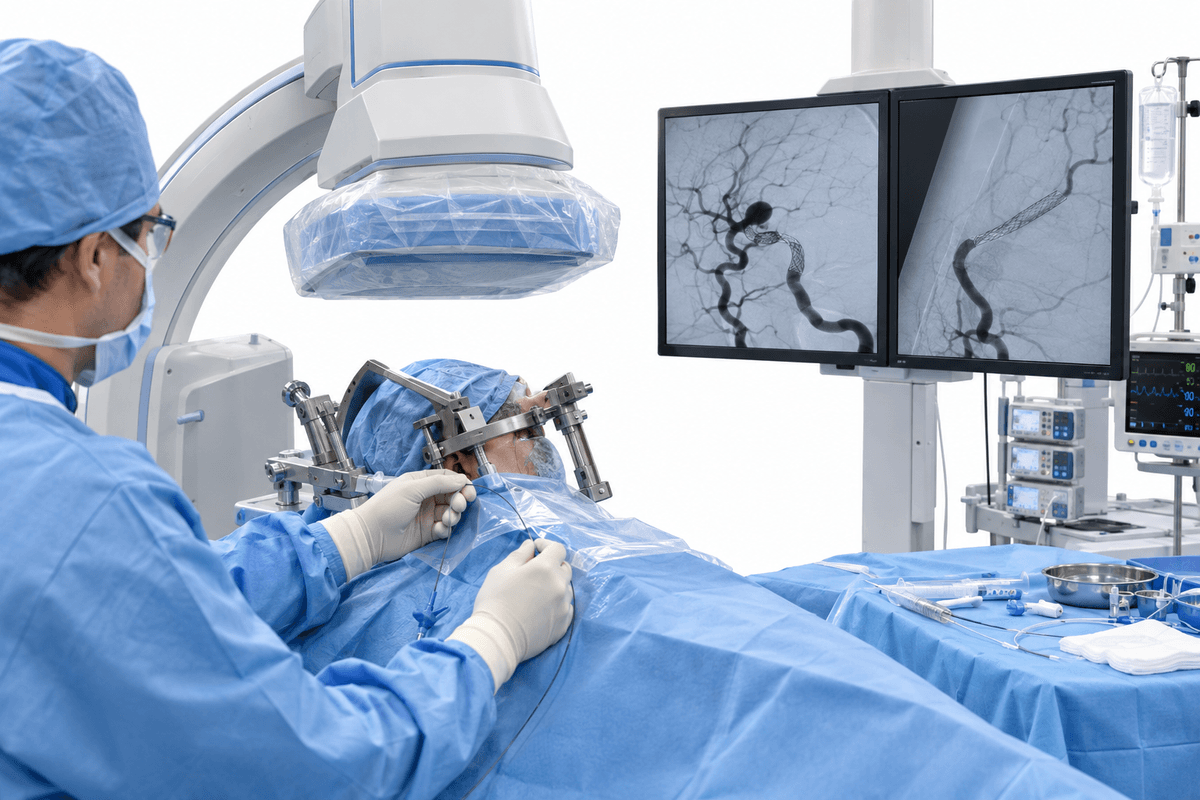
Performed by Dr. Venkata Harin Reddy Muduganti at Dr Venkata Harin Reddy
Intracranial Angioplasty and Stenting in Hyderabad is an advanced minimally invasive procedure that opens narrowed or blocked arteries inside the brain to restore proper blood flow and prevent stroke. This endovascular technique uses a balloon catheter and metal stent to widen stenotic intracranial vessels, reducing the risk of recurrent ischemic events. Dr Venkata Harin Reddy Muduganti provides specialized neurological care for patients requiring this life-saving intervention.
We believe in honest, upfront disclosure so you can make an informed decision.
A step-by-step look at what happens during this procedure.
A thin catheter is inserted through a small puncture in the groin or wrist artery and carefully navigated through blood vessels to reach the narrowed intracranial artery under real-time X-ray guidance.
Contrast dye is injected through the catheter to visualize the exact location and severity of the arterial narrowing, allowing precise treatment planning and assessment of blood flow patterns.
A specialized balloon catheter is advanced across the narrowed segment and inflated to compress the atherosclerotic plaque against the vessel wall, widening the artery and restoring blood flow.
A self-expanding or balloon-mounted metal mesh stent is positioned at the treated site and deployed to maintain the opened artery, preventing elastic recoil and providing structural support to the vessel wall.
Final angiography confirms adequate blood flow restoration and proper stent positioning. The catheter is removed, and the access site is sealed with manual compression or closure device, completing the procedure.
A structured, patient-first approach from first consultation to full recovery.
Dr Venkata Harin Reddy conducts thorough neurological examination and reviews detailed imaging studies to determine the precise location of stenosis, evaluate collateral circulation, and assess candidacy for endovascular intervention.
Using state-of-the-art neuroimaging and microcatheter technology, Dr Muduganti performs the angioplasty and stenting with meticulous attention to minimizing embolic complications and achieving optimal vessel recanalization.
Following the procedure, patients receive close neurological monitoring in a specialized unit where Dr Venkata Harin Reddy oversees antiplatelet therapy management and watches for any signs of complications or neurological changes.
Dr Venkata Harin Reddy establishes a comprehensive follow-up schedule including repeat imaging at specific intervals to monitor stent patency, assess for restenosis, and optimize long-term stroke prevention strategies with appropriate medications.
What to expect at each stage of your recovery journey.
Patients remain on bed rest for 4-6 hours with continuous neurological monitoring and vital sign checks. The access site is observed for bleeding or complications while antiplatelet medications are initiated to prevent stent thrombosis.
Over 3-5 days of hospitalization, patients undergo serial neurological examinations, blood pressure optimization, and medication adjustments. Gradual mobilization occurs with physical therapy assessment if needed, and education on dual antiplatelet therapy compliance is provided.
Following discharge, patients continue medications strictly and avoid strenuous activities for 2-4 weeks. Regular follow-up appointments include clinical assessments and imaging studies at 6 weeks, 3 months, 6 months, and annually to monitor stent patency and neurological status.
Successful intracranial stenting significantly reduces the annual risk of recurrent stroke in the treated vascular territory, with studies showing stroke risk reduction from 15-20% annually to 3-8% with proper medical management and patent stent.
The procedure immediately restores adequate blood flow to previously ischemic brain regions, potentially improving neurological function, reducing transient ischemic attack frequency, and enhancing cognitive performance in affected vascular territories.
Patients experience reduced anxiety about recurrent stroke events, improved confidence in daily activities, and better functional independence. The minimally invasive approach allows faster return to normal activities compared to traditional surgical options.
With appropriate dual antiplatelet therapy and risk factor modification, most patients maintain excellent stent patency rates of 80-90% at one year, providing durable protection against stroke in the treated vascular territory.
Let's clear up some of the most common myths about intracranial angioplasty and stenting.
Get a personalised assessment from an experienced specialist. Understand your options, ask your questions, and decide with confidence.